Glaucoma


Being a glaucoma suspect does not mean you have or ever will have glaucoma. It does mean, however, that because of some of the results of your tests and/or family history, you have a higher potential or some risk factors of developing glaucoma.


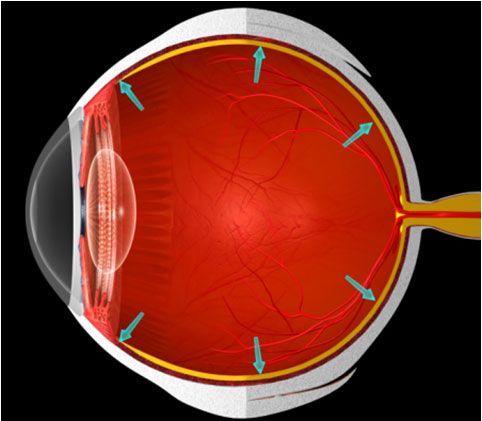
Glaucoma is basically a plumbing problem in the eye. It is caused by the unrelieved pressure of fluid in the eye. There is a structure in the eye that produces fluids and helps to nourish and keep it firm. This fluid must drain out of the eye, in order to maintain a healthy eye pressure. Some people have a large drainage angle from which this fluid must drain, while others have a medium or small angle. Although glaucoma cannot be cured, it can be controlled by eye drops, which may be used to decrease the fluid production, or to help open the drain. Rarely is surgery necessary.


Dr. Baron recommends that as a glaucoma suspect, you should be evaluated more frequently than usual. It is highly advisable that you have a glaucoma workup every 3‑6‑12 months, depending upon your risk factors. You should learn as much as you can about this condition through fact sheets, films, and asking Dr. Baron any questions you may have. If monitored and cared for, as needed, there should be no concern of visual loss. Anyone can diagnose glaucoma when it is too late and you have lost half of your vision. Today we have the knowledge, techniques, and sophistication to monitor even slight changes of visual loss, to enable us to start care before any significant loss occurs.


Glaucoma rarely has any symptoms. If untreated it slowly destroys the side vision, and, by the time the patient is aware of it, it is irreversible. If you are a narrow‑angle glaucoma suspect, you should be aware of (and act on) the following:


1. Advise your physician and dentist so that they are very careful not to prescribe drugs that might precipitate an attack of glaucoma.


2. If you have an extremely painful eye, go to an emergency room and tell them you may be having an acute glaucoma attack. Fortunately, this is a rarity. The damage to your eye is related to time; by having the high pressure reduced quickly, you should have no, or minimal, damage to your eye.


3. Conversely to #2, you may be unaware of slightly elevated pressure for years and, unfortunately, this can cause serious visual loss. This is a reason for frequent check‑ups.


4. If you have a dull aching eye, upon awakening, call our office first thing in the morning for a pressure check as soon as possible.


Have periodic recommended workups, to prevent loss of vision. In this situation, it is better to be safe than sorry!


BLINDNESS IS NOT ROUTINE. PREVENTING IT SHOULD BE!!!


Risk Factors Include:

  • High Eye Pressure
  • Narrow Drainage
  • Large/Deep Optic Nerve Cup
  • Family History
  • Birth Days
  • Health and Medications
  • Questionable Visual Fields
  • High Rx


During the visual analysis, Dr. Baron performs the following tests for studying any potential of glaucoma:


TEST FOR PERIPHERAL VISION: This is done, routinely, to check the patient’s peripheral field of vision. If loss occurs, it happens so slowly that one is rarely aware of any vision loss.


INTERNAL EYE EVALUATION: This is also done, routinely, with a special instrument called an ophthalmoscope, which evaluates the structure of the interior of your eyes. In glaucoma, the internal eye pressure increases and pushes on the optic nerve head. This area is carefully studied with this instrument, to make sure all is as it should be.


ANGLE OF OUTFLOW: In order to keep your internal ocular pressure within normal limits, the angle of outflow (like a sink drain or a safety valve) must be open and clear. Details of this area are studied with a powerful microscope.


TONOMETRY: This test is performed on all patients over thirteen years of age, routinely, and others, when indicated. Our office utilizes an non‑contact tonometer, which is quick and painless. It measures the actual pressure within your eye and gives us a digital readout, which is then compared with normal pressure ranges.


GOLDMAN TONOMETER: If the pressure within your eye is high or questionably high, we use the Goldman tonometer to re‑check it. This very quick and accurate method for measuring pressure is used with a powerful microscope and special dye. The reading will also be compared with normal pressure ranges.


* Special tests performed when necessary


*VISUAL FIELDS STUDY FOR GLAUCOMA: Our computerized, peripheral visual field instrument has a specific program which evaluates the areas that are damaged by high eye pressure from glaucoma. This instrument painlessly maps out your peripheral field of vision, in order to measure its quantitative and qualitative extent. It can reveal even very small amounts of damage resulting from glaucoma.


*FUNDUS PHOTOGRAPHY: A picture of the internal eye is taken and kept on file for future comparisons.


*PACHYONGLELP: This instrument measures the corneal thickness to accurately calibrate you eye pressure reading.


*DIURNAL VARIATIONS: The pressure in your eye varies throughout one day, hopefully within the normal ranges. If the pressure changes greatly throughout one day, your eye may not be able to withstand this continual increase and decrease of pressure. We are able to determine these variations by measuring your pressure three times in one day (9:00 a.m., noon, and 5:00 p.m.).


Do not drink alcoholic beverages or excesses of any liquids during this day.


Hours

Monday
9:00 am - 5:00 pm

Tues & Wed
9:30 am - 6:00 pm

Thurs & Fri
8:30 am - 5:00pm

Saturday
8:15 am - 1:00 pm
Visit AllAboutVision.com for complete information on eyeglasses and contact lenses, and for an explanation of myopia.